Here's the short answer: neither grass nor mats is universally "better" for your game — the myth that grass is always superior for practice is wrong. Grass tees are better for feel, turf interaction, and pre-round warmups; quality mats are better for high-volume reps, consistency, and building a repeatable swing. The smartest Palm Beach Gardens golfers use both, depending on what they're actually trying to fix that day.
If you've been told mats are for beginners and grass is for "real" golfers, you've been sold a story that ignores how modern practice actually works. Let's unpack what each surface truly does to your game, what the local range landscape looks like, and how to pick the right one for your next session.
Is grass really better than mats for your golf game?
No — that's the biggest myth in range practice. Grass tees give you honest feedback on ball-turf contact and divot quality, which matters for wedges and irons. Modern mats give you a consistent, injury-friendly surface for repetitive work on swing mechanics. Both have a job. Serious players in Palm Beach Gardens rotate between them on purpose.
The reason the myth persists is simple: mats hide fat shots. Hit six inches behind the ball on grass and you take a chunk of South Florida turf. Do the same on a mat and the club bounces cleanly into the back of the ball, and you walk away thinking you striped it. That's not the mat's fault — that's a coaching gap. A good instructor at a facility like Palm Beach National Golf & Country Club will watch your strike pattern regardless of surface and tell you what actually happened.
What does a grass tee actually do for your practice?
A grass tee gives you real ball-turf interaction — you see your divot, feel the club dig or skip, and get honest feedback on strike location. It replicates course conditions because it IS course conditions. That makes grass ideal for wedge work, iron gapping, and the last 20 balls before you tee off.
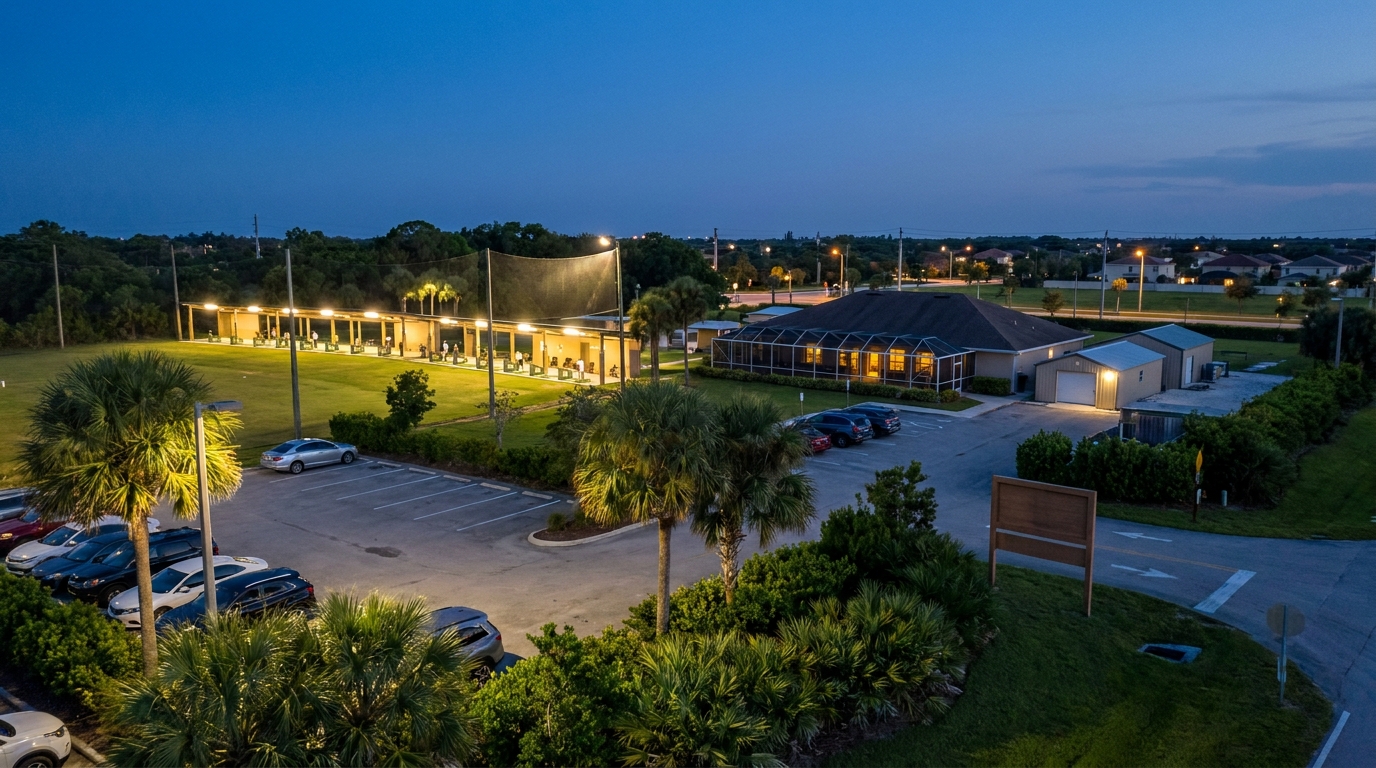
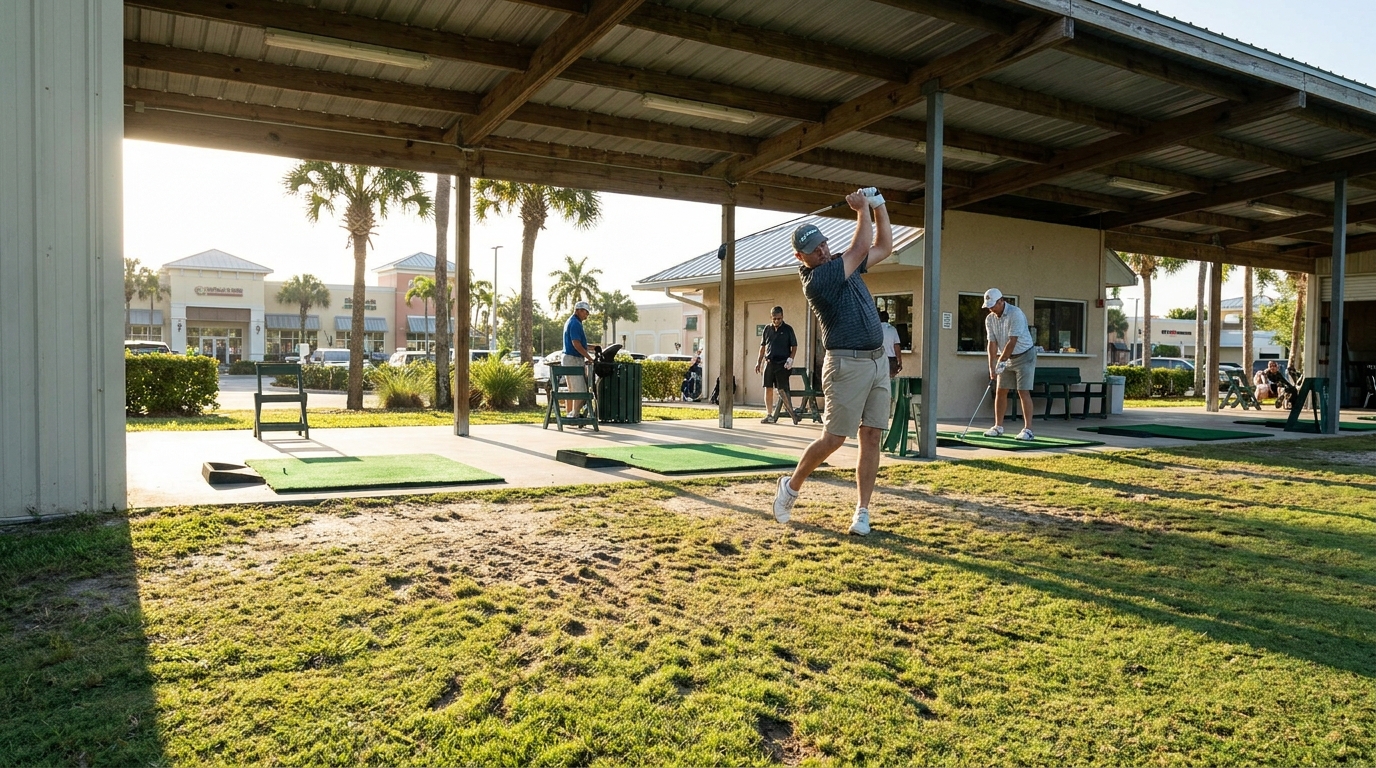
In Palm Beach Gardens, grass tee availability is genuinely limited. The city-owned Nest at Sandhill Crane, for example, operates a 60,000 sq. ft. grass tee on a lighted range, but per the city's FAQ, the facility rotates between grass-only and mat-only days to protect turf recovery. That rotation is normal for South Florida — Bermuda turf under constant divot pressure through the snowbird months (roughly November through April) needs recovery windows or the tee line dies.
Translation: even if you strongly prefer grass, you can't count on it being open the day you show up. Call ahead, or pick a facility that gives you a dependable grass answer.
What do mats actually do for your practice?
Quality mats give you a stable, repeatable hitting surface that's available every day, rain or shine, and easier on your joints during long sessions. They're the right call for drill work, tempo reps, video sessions, and rebuilding a move you're trying to groove. They're also the honest answer for beginners who need volume without fighting turf conditions.
The old knock on mats — that they teach you to scoop or bounce the club — applies mostly to cheap, thin mats over concrete. Modern range mats with proper cushioning and realistic fiber density behave much closer to turf than range mats did a decade ago. Pair them with a launch monitor and mats become arguably the most efficient practice surface available, because you're getting swing feedback plus ball-flight data on every rep.
That's exactly why the Palm Beach Gardens range scene has leaned into technology. Where you used to just hit balls, you can now hit into a bay with Trackman data, TVs, and a full food-and-drink setup — the kind of experience one recent reviewer at Palm Beach National described as an "awesome" pre-round warmup with monitors right at the range.
Grass vs mat driving range: how do they actually compare?
Here's a straight-up comparison of what each surface delivers for Palm Beach Gardens golfers. Neither wins overall — they win in different categories.
| Factor | Grass Tee | Quality Mat |
|---|---|---|
| Realism / turf feedback | Excellent — real divot, real contact | Good with modern mats; hides fat contact |
| Availability in Palm Beach Gardens | Limited; rotates by day at public facilities | Available almost every day, all weather |
| Best for | Wedges, irons, pre-round warmup | Drill reps, tempo, beginners, lessons |
| Joint impact over long sessions | Soft, forgiving | Very forgiving with quality cushioning |
| Pairs with launch monitor | Yes, when open | Yes, and more consistently |
| South Florida weather tolerance | Closed after heavy rain, closed for turf recovery | Playable through afternoon showers and humidity |
Which surface is better for beginners in Palm Beach Gardens?
For most beginners, mats paired with a lesson are the better starting point. Mats give you a consistent surface so you can focus on grip, posture, and contact without fighting bad lies. They're also more forgiving on the hands and wrists when you're hitting hundreds of balls a week trying to build a swing.
If you're searching for a driving range with golf lessons or a place where beginners can practice without feeling on display, look for facilities that offer covered bays, technology feedback, and instructors who work on the same surface you're practicing on. At Palm Beach National, the range and bar-area setup with monitors gives newer players a low-pressure environment to work on swings while getting real ball-flight numbers back — the kind of loop that builds skill faster than hitting into an open field with no feedback.
What should you look for in a Palm Beach Gardens practice facility?
Look for four things: surface quality (whichever type you prefer), technology that gives you actual data on your swing, an instructor or pro on-site if you're still developing, and honest availability during South Florida's tricky weather months. Bonus points for a comfortable place to hang out after — practice sticks better when the environment doesn't feel like a chore.
Palm Beach Gardens has a competitive golf market, from municipal ranges to private clubs to hybrid public-access facilities. The right pick depends on how you practice. If you want technology-forward bays with a social atmosphere and a course to play afterward, Palm Beach National fits that profile — the facility carries a 4.5-star rating across 642 Google reviews, with customers repeatedly calling out course conditions, staff, and the modernized range and bar area. One reviewer summed it up by pointing to "new updates" that "blew me away" at the range and clubhouse.
Frequently Asked Questions
Do professional golfers practice on grass or mats?
Both. Tour players warm up on grass tees before rounds because it replicates course conditions, but many practice extensively on mats during off-season work, indoor sessions, and technology-based training. The idea that pros only touch grass is a myth — mats are standard equipment in nearly every tour player's training environment, especially when paired with launch monitors.
Will hitting off mats hurt my game or cause injury?
Quality modern mats will not hurt your game, and injury risk is low when the mat has proper cushioning underneath. The old wrist-and-elbow complaints came from thin mats over concrete. Cheap mats can reinforce a scooping swing because they hide fat contact, so pair mat sessions with a launch monitor or an instructor who can spot strike issues you can't feel.
Where can beginners practice golf in Palm Beach Gardens?
Beginners should look for facilities that offer covered hitting bays, on-site instruction, and a welcoming atmosphere — not just an open field. Palm Beach National Golf & Country Club offers a range with bar-area monitors that gives newer players a low-pressure spot to work on swings with real feedback. Facilities with lessons plus range access are the fastest path to actual improvement.
Is grass always available at Palm Beach Gardens driving ranges?
No. Public facilities in the area rotate between grass-only and mat-only days to allow the Bermuda turf to recover, especially during the busy November-through-April season when snowbird traffic peaks. Always call ahead if you specifically want a grass tee. Private and semi-private club ranges often have more consistent grass access because their tee lines see lower daily volume.
Can I use a launch monitor on both grass and mats?
Yes. Launch monitors like Trackman work on either surface — they read the club and ball, not the tee surface. Data is often more consistent on mats because the hitting surface itself doesn't change between shots, which is why technology-equipped bays at Palm Beach Gardens facilities typically use mats. Grass sessions with a monitor add ball-turf realism to the data picture.
How often should I practice at a driving range to improve?
Two to three focused sessions per week beats one long marathon session for most golfers. Aim for quality over quantity — 40 to 60 intentional balls with a specific goal (wedge distance control, driver path, tempo) will improve your game faster than 200 balls hit at random targets. Beginners benefit from adding a lesson every two to four weeks to make sure practice reps are grooving the right patterns.
The bottom line
The grass-versus-mat debate is a false choice. Grass wins for realism and pre-round feel. Mats win for volume, consistency, weather tolerance, and pairing with technology. The Palm Beach Gardens golfers who improve fastest use whichever surface serves the day's goal — and pair either one with real feedback, whether that's a launch monitor, an instructor, or both.
If you're in Palm Beach Gardens and want a range setup built around technology, comfortable bays, and a course to play right after, you can reach Palm Beach National Golf & Country Club at palmbeachnational.com to plan a visit or book a session. Whatever surface you end up hitting off, make sure the practice actually teaches you something.